How We a Leonrua Mating
Every Leonrua pairing is guided by rigorous health screening, genetic insight, and a deep respect for each dog’s unique qualities. Our process ensures each litter embodies the best of temperament, structure, and heritage.
Meet the Pair
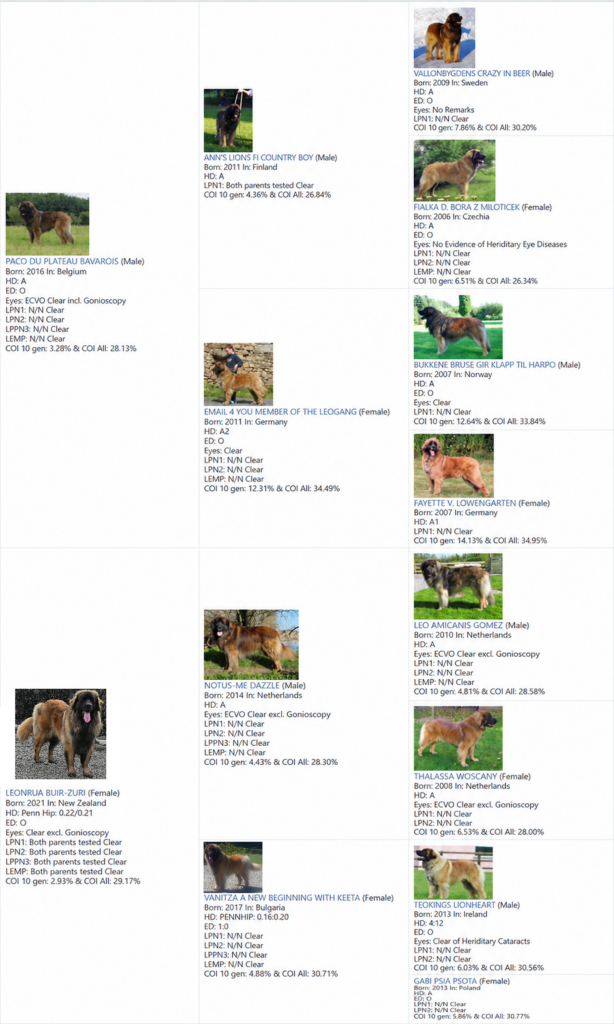
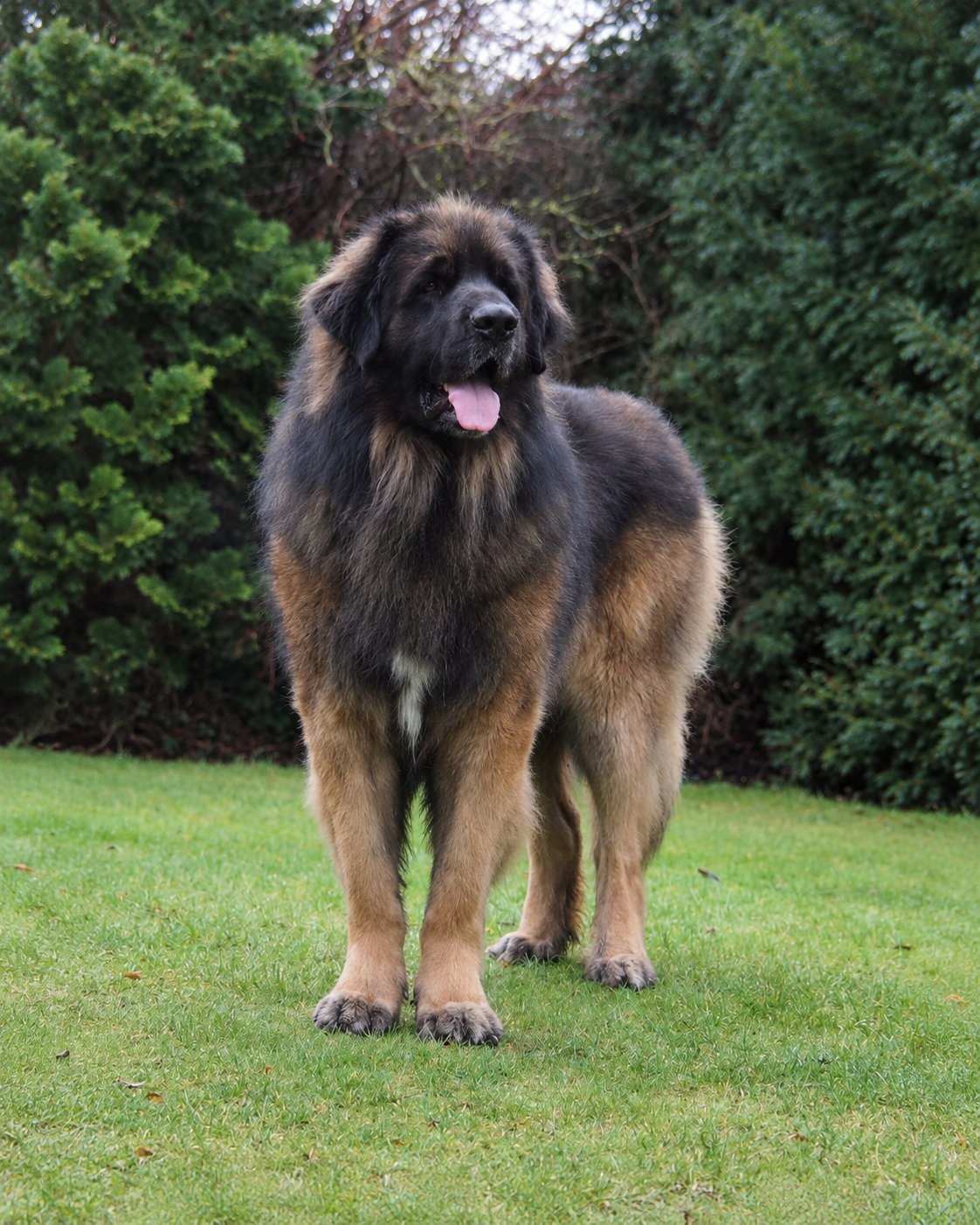
Int. Ch. Multi Ch. Int. Vet. Ch. Vet. Ch. Paco du Plateau Bavarois
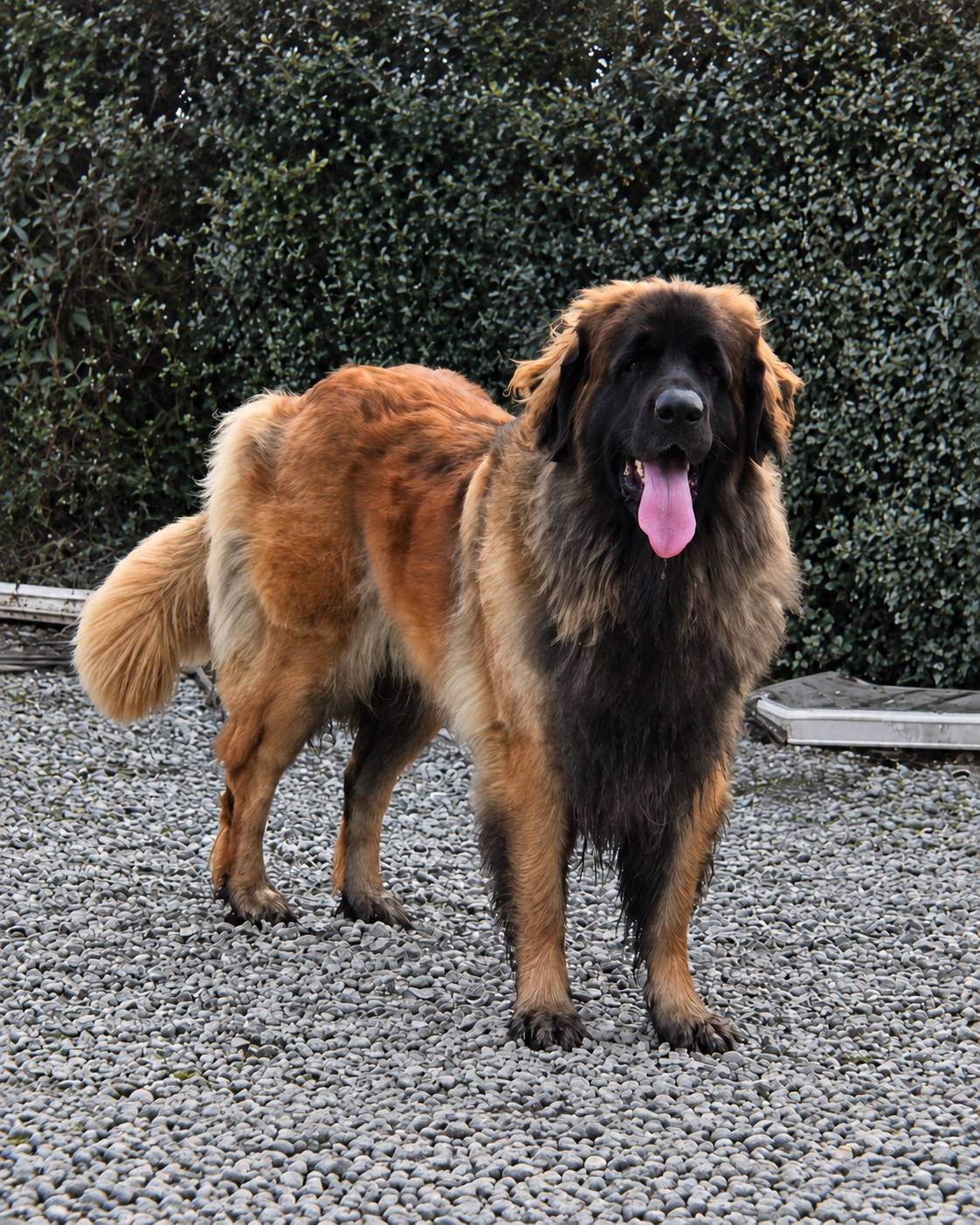
A gentle, confident male with outstanding hip scores, clear eyes, and a calm, affectionate nature. Paco brings robust genetics and a proven show record.
COI 10 gen: 3.28% & COI All: 28.13%
Eyes – ECVO Clear incl. Gonioscopy
Hips – A
Elbows – O
LPN1 – N/N
LPN2 – N/N
LPN3 – N/N
LEMP – N/N
Leonrua Buir-Zuri
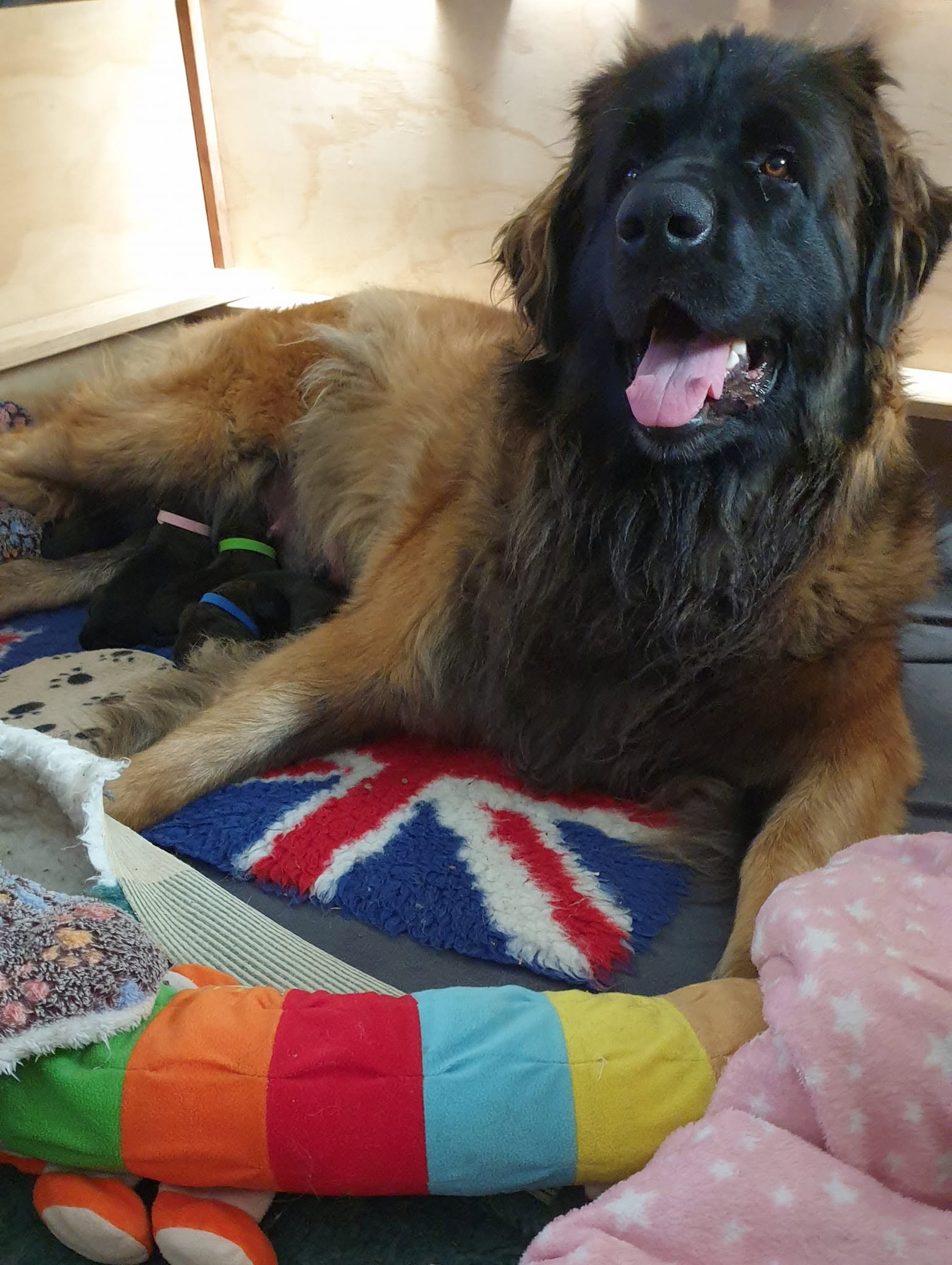
Dam
A nurturing, intelligent female with excellent health clearances and a playful, attentive temperament. Zuri’s pedigree is rich in longevity and soundness.
COI 10 gen: 2.93% & COI All: 29.17%
Eyes – Clear excl. Gonioscopy
Hips – Penn Hip: 0.22/0.21
Elbows – O
LPN1 – N/N (Cleared by parentage)
LPN2 – N/N (Cleared by parentage)
LPN3 – N/N (Cleared by parentage)
LEMP – N/N
Explore Their Story
The Breeding Decision Journey: Step by Step
Step 01: Comprehensive Health Screening
Step 02: Genetic Diversity & Pedigree
Step 03: Temperament & Compatibility
Our Commitment to Quality and Care
At Leonrua Leonbergers, we prioritise natural health, temperament, and responsible breeding practices to ensure our dogs are happy, healthy, and well-adjusted family members. Our dedicated team works tirelessly to uphold the highest standards of quality and care. Our goal is to increase the genetic diversity of leonbergers in New Zealand for years to come.
Thoughtful Pedigrees
We look beyond individual dogs to the families, ancestors and combinations behind them.
Genetic Diversity
Coefficient of inbreeding and shared ancestry form part of our breeding decisions.
Health & Temperament
Health information, temperament and soundness matter alongside breed type.
The Whole Leonberger
Our goal is a healthy, confident and well-adjusted Leonberger that can thrive as part of a family.
Comprehensive Health & Genetic Test Comparison
- Hips & Elbows: OFA/FCI/PennHIPP/Lavelle certified, with direct links to official results
- Eyes: Annual ophthalmologist exams, clear of hereditary issues
- Genetic Tests: Full panel for breed-specific conditions, all results available for review
Worldwide Independent Leonberger Database
Transparency matters to us. The health testing results for dogs in our breeding programme are available through the Worldwide Independent Leonberger Database, giving prospective owners and other breeders direct access to the information behind our breeding decisions. We believe open health records support more informed choices, both when planning matings and when choosing a Leonberger puppy. Take a look at Ambar’s pedigree on the database.
Genetic Diversity and Lineage Considerations
- Genetic Variation: Each pairing is selected to maximize healthy diversity within the Leonrua line.
- Lineage Mapping: Detailed pedigree analysis prevents inbreeding and preserves unique traits.
- Future Health: Our approach supports strong immune systems and overall breed resilience.
A brief genetic history of the Leonberger
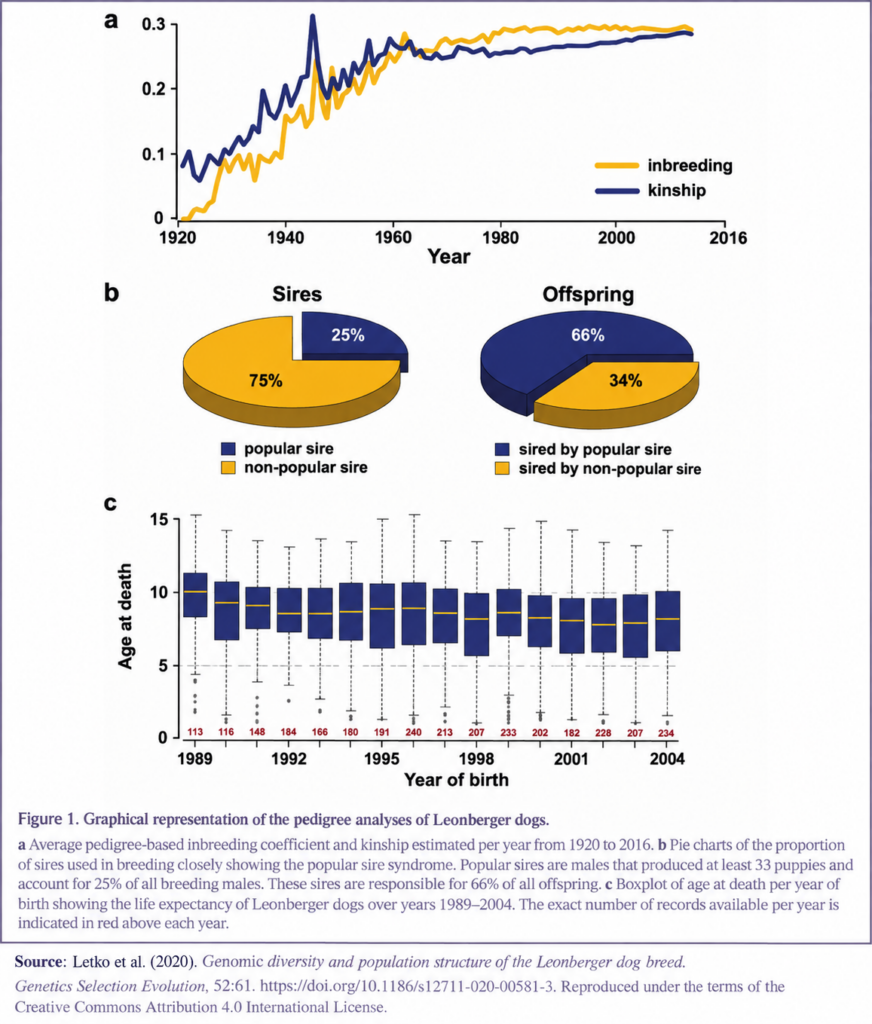
The Leonberger was established in Germany in the mid-19th century, but the modern breed has passed through several severe genetic bottlenecks. The most significant occurred during the 1940s: only 17 registered dogs remained in 1946, all already showing some degree of inbreeding.
Although the breed subsequently expanded worldwide, much of that growth came from a relatively small number of influential dogs. A major genomic study identified 22 founder animals, with just three contributing almost 46% of the ancestry of dogs born in 2016. It also found a strong “popular sire” effect: around 25% of breeding males accounted for 66% of offspring.
The consequence is that modern Leonbergers are unusually closely related as a population. The 2020 study found average pedigree inbreeding of about 29%, genomic inbreeding of about 28%, and average kinship of about 31%. It found no substantial genetically distinct sub-populations that could simply be used to restore diversity.
Earlier mean-kinship analysis reached a similar conclusion: although many thousands of Leonbergers exist today, the surviving genetic diversity is equivalent to only a very small number of unrelated founders. This is why modern Leonberger breeding increasingly focuses not only on avoiding close matings, but on preserving genetic diversity, limiting overuse of individual sires and dams, monitoring mean kinship, and using DNA testing alongside pedigree data.
Pedigree
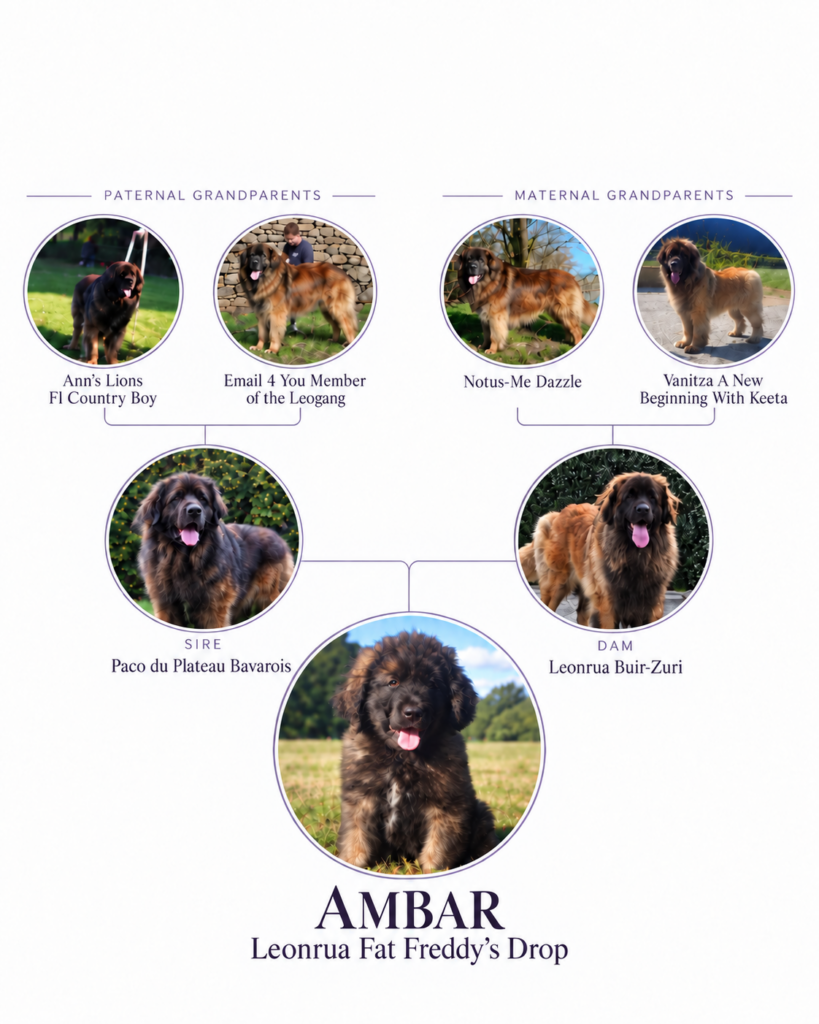
Explore Ambar’s pedigree
Trace the dogs and bloodlines behind Ambar – Leonrua Fat Freddy’s Drop.
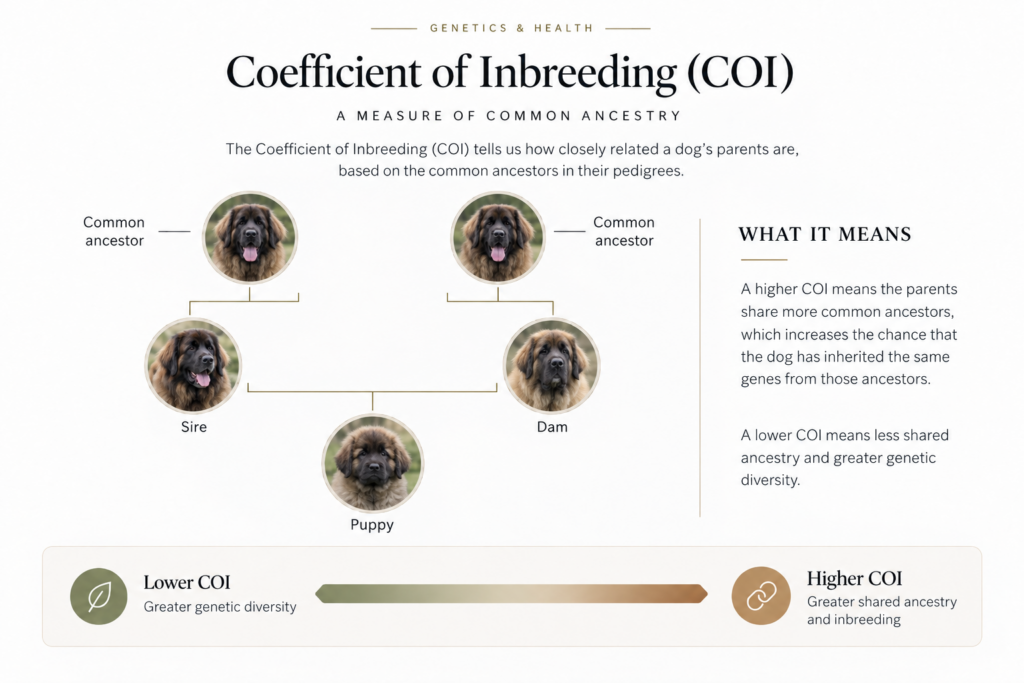
Coefficient of Inbreeding (COI)
The Coefficient of Inbreeding (COI) is a measure of how closely related the parents of a dog are, based on the common ancestors in their pedigrees. It estimates the probability that a dog has inherited two copies of the same gene from a common ancestor. A lower COI generally indicates greater genetic diversity, while a higher COI indicates a greater level of shared ancestry and inbreeding.
CoI Level
Scale showing the coefficient of inbreeding from 0% to 50%
Full-sibling / parent–offspring equivalent
A CoI of 25% is the pedigree-equivalent level expected from a full-sibling mating or a parent–offspring mating.
CoI is a measure of pedigree relatedness and genetic risk, not a direct measure of an individual dog's health.
The Strength Behind the Pairing
A closer look at the qualities, pedigree and genetic contribution Paco and Zuri each bring.
Paco
What he brings
- Temperament: Calm, gentle, friendly and quietly confident.
- Health: Strong health-testing results.
- Conformation: Proven breed type, soundness and movement, with multiple championship, CACIB and Best of Breed awards across Europe.
- Pedigree: Important European lines not currently represented in New Zealand.
- Genetic contribution: Adds valuable diversity to the New Zealand Leonberger gene pool.
Zuri
What she brings
- Temperament: Calm, confident, affectionate, energetic and a proven mother.
- Health: Strong health-testing results.
- Conformation: Excellent structure, substance and rich red colouring. Deep black mask, chest and mane.
- Pedigree: Strong European show lines not previously represented in New Zealand.
- Genetic contribution: Introduces new bloodlines and broadens local genetic diversity.
Why This Combination?
Paco and Zuri were selected because their strengths complement one another across temperament, health, conformation and pedigree. Just as importantly, both bring bloodlines that are new to New Zealand, creating an opportunity to broaden genetic diversity rather than further concentrate the lines already established here. The pairing is considered as a whole, including coefficient of inbreeding, pedigree depth and the long-term genetic contribution of both dogs.
Ambar at a Glance
The temperament, character and breed qualities that make Ambar who she is.